When you order custom golf balls in bulk, the logo is the easy decision. The harder one is which ball to print it on. A range ball, a soft two-piece, and a tour-level urethane ball all take a logo the same way, but they play so differently that the wrong choice can make an otherwise generous gift feel cheap, or make a giveaway cost three times what it needed to. This comparison lays out the specs that actually separate golf balls so you can match the ball to the people receiving it.
The three tiers you are really choosing between
Nearly every custom golf ball falls into one of three market tiers. Value and range balls are two-piece designs with a firm ionomer cover, built to be nearly indestructible and cheap by the bucket; they are the right call for driving-range stock, high-volume tournament handouts, and giveaways where quantity matters more than performance. Mid-tier balls add a softer core or a third layer and balance distance with a bit more feel, which makes them the popular choice for club logo balls and member gifts. Premium tour balls use three to five layers under a urethane cover to deliver the greenside spin and control that better players notice immediately; they are what you order when the recipient is a serious golfer or a sponsor you want to impress.
Those three tiers also track price. The gap between a value ball and a tour ball at the same quantity can be several times over, so the tier decision drives your budget more than the imprint ever will.
What compression does, and what it does not
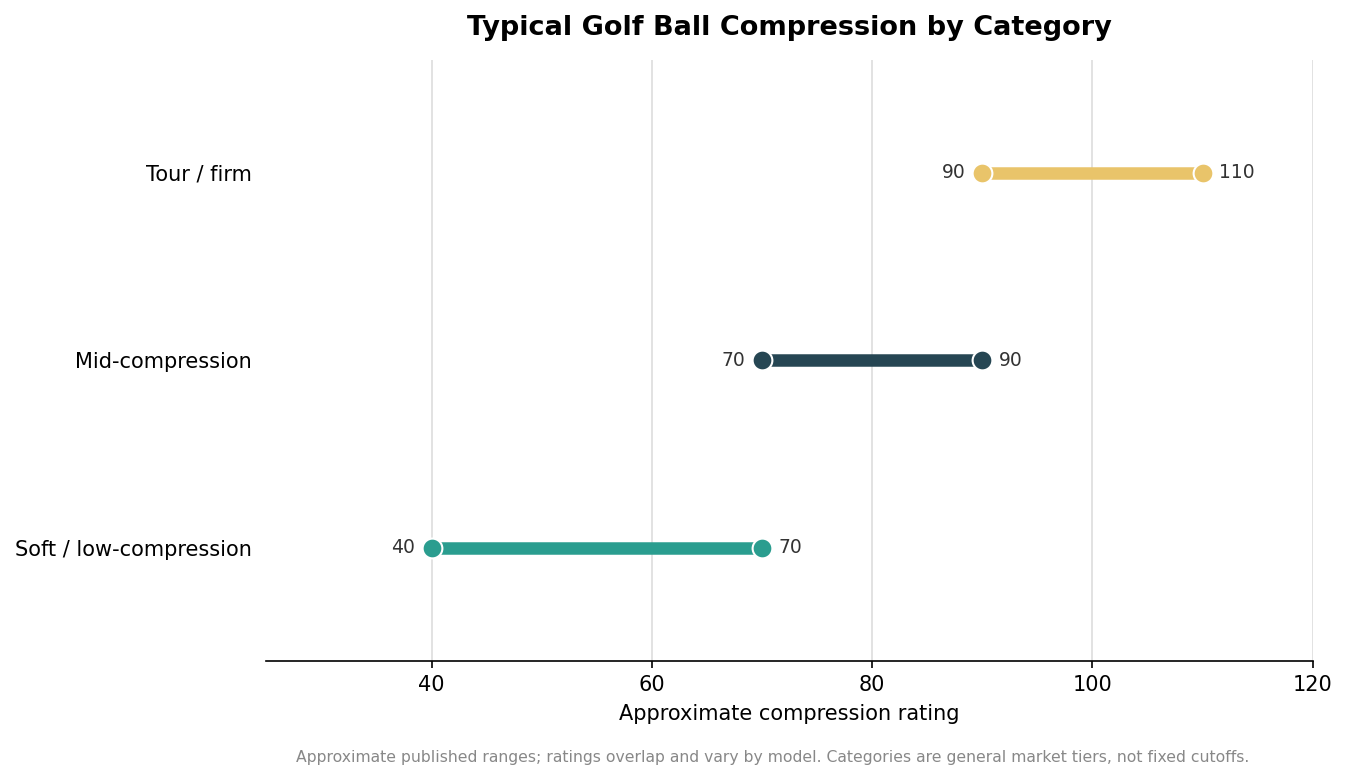
Compression describes how much a ball deforms at impact, on a scale that runs from around 40 to well over 100. Soft, low-compression balls sit roughly in the 40 to 70 range, mid-compression balls in the 70 to 90 range, and firm tour balls at 90 and above. Lower compression generally feels softer and springs off the face more easily at slower swing speeds; higher compression feels firm and rewards faster, more aggressive swings.
It is worth being honest about the limits of this number, because a lot of marketing overstates it. At moderate swing speeds the distance difference between a soft ball and a firm one is small, and the qualities golfers care about most, greenside spin and feel around the green, come more from the cover material and how the layers are stacked than from the compression rating alone. Treat compression as one useful sorting tool, not the whole story.
Cover and construction: where feel and spin come from
The cover is the single biggest driver of on-course performance. Ionomer covers, often called Surlyn, are hard and cut-resistant; they produce lower spin, last a long time, and keep value balls affordable, which is exactly what you want for a ball that will get topped and skulled at a charity scramble. Urethane covers are softer and grip the grooves of a wedge, generating the greenside spin that lets a shot check up on the green. That spin is the result of stacking a soft cover over firmer inner layers, which is why premium balls carry three, four, or five pieces rather than two.
For a bulk buyer, the practical takeaway is that construction and cover, not the logo, decide whether the ball feels like a premium gift or a range rock. A two-piece ionomer ball is the workhorse; a multilayer urethane ball is the statement piece. There is no wrong answer, only a right one for the audience.
Match the ball to who receives it
Start from the recipient and work backward to the spec. For range buckets, welcome-bag giveaways, and large outings where balls will be lost by the sleeve, a firm two-piece value ball is the sensible pick, and its higher compression barely matters when the goal is durability and volume. For club members and everyday players, a mid-compression ball offers a noticeably softer feel without the tour price. For sponsors, prize tables, and gifts aimed at low-handicap golfers, a soft urethane tour ball earns its cost because those players will feel the difference on every approach shot.
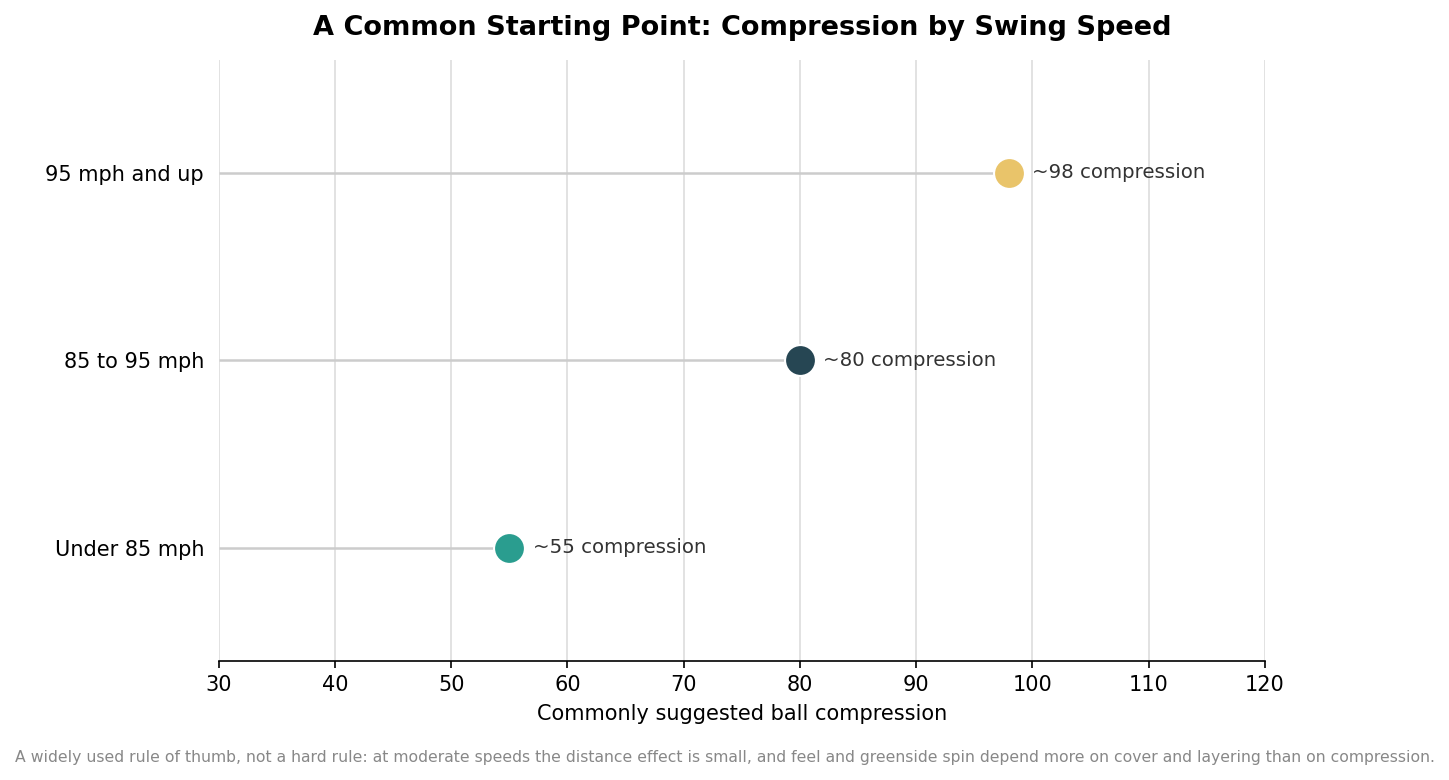
Swing speed is a reasonable tiebreaker when you know your audience. The common guideline pairs slower swings with lower compression and faster swings with firmer balls, shown below. Use it as a starting point rather than a rule, since the real-world distance effect is modest for most golfers and personal feel preferences vary widely.
Then confirm quantity, print, and lead time
Quantity sets the unit price, and golf balls are almost always sold by the dozen. Custom logo runs typically price in tiers by the dozen or the case, and the per-ball cost drops as you move up in volume, so it pays to confirm the exact break points before you settle on a tier. Most logo balls are decorated by pad printing or UV digital printing, and a modern imprint holds up well through a round; a full-color design is easier on a lighter cover, so check that your artwork reproduces cleanly on the ball you chose. Finally, plan the calendar. Custom golf balls take about 2 weeks of production plus shipping at Get Custom Golf Balls, and demand spikes ahead of the summer tournament season, so order with a buffer and approve your proof promptly to protect the date.
Packaging is the last lever, and it changes perception cheaply. The same ball reads very differently loose in a bucket, in a printed three-ball sleeve, or in a dozen box with a custom lid. For giveaways, a sleeve of three keeps handout costs down while still looking finished; for sponsor and prize gifts, a boxed dozen with a matching imprint turns a commodity into something recipients set on a shelf rather than tee up and lose. Decide packaging alongside the ball tier, not after, so the presentation matches the money you spent on the ball itself.